Embarking on a camping trip promises serene moments under the stars, but what happens when darkness falls? Reliable illumination is crucial, and for modern adventurers, solar camping lights have become the ultimate solution. These innovative devices harness the sun’s power, offering an eco-friendly, cost-effective, and hassle-free way to brighten your outdoor experiences. From setting up your tent after dusk to enjoying late-night conversations by the campfire, solar camping lights provide the dependable glow you need, transforming your campsite into a comfortable and inviting haven without the need for cumbersome batteries or noisy generators.
Solar Camping Lights: Your Essential Guide to Sustainable Illumination
The evolution of camping gear has brought forth a remarkable shift towards sustainability, with solar camping lights leading the charge. These lights convert sunlight into electricity, storing it in integrated batteries to power LEDs after dark. Their convenience, combined with their minimal environmental impact, makes them a must-have for any outdoor enthusiast.
Types of Solar Camping Lights
The market for solar camping lights is diverse, offering a variety of designs tailored for different needs and preferences. Understanding each type can help you select the perfect fit for your next adventure.
Lanterns
Solar lanterns are perhaps the most popular category, designed to provide ambient, diffused light for a campsite or inside a tent.
- Inflatable/Collapsible Lanterns: These are highly portable, packing down flat for easy storage and transport. Brands like MPOWERD Luci and LuminAID excel in this category. Many inflate with a simple puff of air or spring open, offering a soft, even glow. Their waterproof nature often allows them to float, adding versatility.
- Pros: Extremely lightweight, compact, often waterproof and durable, good for ambient light.
- Cons: Can be less robust than fixed models, brightness might be lower.
- Applications: Backpacking, tent lighting, general campsite ambiance, emergency kits.
- Fixed/Block-Style Lanterns: These resemble traditional lanterns but are powered by solar. Some, like the BioLite SunLight, are compact blocks offering focused or multi-color light. They often feature more rugged builds and might include additional functionalities.
- Pros: More durable, can offer brighter or more varied light modes, sometimes include power bank features.
- Cons: Less portable than inflatable options, can be heavier.
- Applications: Car camping, base camps, outdoor dining areas, home emergency lighting.
- Multi-functional Lanterns: Many solar lanterns now integrate features beyond basic illumination. These often include a flashlight mode for focused beam lighting, an SOS flashing mode for emergencies, and even USB ports to charge small electronic devices.
String Lights
For those looking to add a touch of charm and extended illumination around their campsite, solar string lights are an excellent choice. These are essentially solar-powered versions of decorative fairy or patio lights.
- Pros: Create a warm, inviting ambiance, spread light over a larger area, easy to hang.
- Cons: Less intense illumination per bulb, primarily decorative.
- Applications: Decorating tents, illuminating pathways, creating a festive atmosphere.
Spotlights
While less common as primary camping lights, some solar models offer a focused spotlight beam. These are useful for specific tasks or for highlighting a particular area.
- Pros: Directed, powerful light for tasks, can be mounted.
- Cons: Not ideal for general area lighting, can be bulky.
- Applications: Navigating trails, locating items in the dark, security around a large campsite.
|
Our Picks for the Best Solar Lights in 2026
As an Amazon Associate I earn from qualifying purchases.
|
||
| Num | Product | Action |
|---|---|---|
| 1 | Solar Motion Lights Outdoor, Ultra Bright Solar Fence Lights with Motion Sensor, IP65 Waterproof Security Light 3 Modes, 270° Lighting Angle, Wall Lights for Deck Patio Fence Garage Door (6 Packs) |

|
| 2 | Aootek New Solar Motion Sensor Lights 120 LEDs with Lights Reflector,270° Wide Angle, IP65 Waterproof, Step Lights for Front Door, Yard, Garage, Deck (Black, Daylight White, 6-Pack) |
|
| 3 | NYMPHY Solar Lights Outdoor Waterproof IP68, 56 LED 3 Lighting Modes Solar Powered Garden Yard Spot Solar Lights for Outside Landscape- 4 Pack (Cool White) |
|
| 4 | LETMY Solar Pathway Lights Outdoor, 10 Pack Solar Lights Outdoor Waterproof, Auto On/Off Solar Powered Garden Landscape Path Lights, Outdoor Solar Lights for Yard Lawn Patio Walkway Driveway |
|
| 5 | ALEPOD Solar Pathway Lights Outdoor - 8 Pack Solar Powered Garden Lights Waterproof IP65, Decor Landscape Lighting with Three Lighting Modes for Yard, Lawn, Walkway, Driveway, Warm White |
|
| 6 | Solar Lantern Outdoor Waterproof, Metal Butterfly, Hummingbirds, Dragonflies, Frogs, Turtles, Flowers, Mushrooms, Garden Decor for Yard, Patio, Lawn, Porch, Backyard, Gifts for Women |
|
| 7 | addlon 54(48+6) FT Solar String Lights Waterproof,Patio Lights Solar Powered with Remote & USB Port 15+1 LED Shatterproof Bulbs 3 Light Modes, Dimmable Solar Light for Camping Backyard Garden |
|
| 8 | Solar Fence Lights Outdoor - 2700/4000/6000K 3 Mode, Waterproof LED, Fence Light Solar Powered for Outside, Backyard/Railing/Step/Patio/Wall and Home Improvement(8 Pack) |
|
| 9 | Tuffenough Solar Outdoor Lights 2500LM 210 LED Security Lights with Remote Control,3 Heads Motion Sensor Lights, IP65 Waterproof,270° Wide Angle Flood Wall Lights with 3 Modes(2 Packs) |
|
| 10 | [6 Packs] Solar Motion Sensor Outdoor Lights, Super Bright Solar Lights Outdoor Waterproof, 3 Lighting Modes Security Wall Light for Outside Walking Dog Fence Backyard Deck Garden Door Step Garage |
|
Comparing Top Solar Camping Light Brands
When choosing a solar camping light, several brands consistently receive high praise for their innovation, reliability, and performance.
- MPOWERD Luci: Renowned for pioneering inflatable solar lanterns, Luci offers a range of models from basic ambient lights to those with mobile charging capabilities. Their lights are praised for being lightweight, waterproof, and providing a pleasant diffused glow. The Luci Pro Outdoor 2.0, for instance, offers 150 lumens and a two-way USB port.
- LuminAID: Another leader in inflatable solar technology, LuminAID lanterns are highly portable and durable. Many models, like the PackLite Max, double as phone chargers and boast impressive battery runtimes, often exceeding 50 hours on a low setting. Their ability to float and withstand submersion makes them ideal for various outdoor conditions.
- Goal Zero: A well-established name in portable power solutions, Goal Zero offers solar camping lights that emphasize durability and versatility. Their Crush Light series, for example, is highly compact, lightweight, and includes unique features like a flickering candlelight mode for ambiance. Many Goal Zero products also integrate seamlessly with their larger solar power systems.
- BioLite: Known for integrating sustainable energy solutions, BioLite offers solar lanterns and even comprehensive solar home systems for base camps. Their SunLight model is a compact, non-collapsible option with multiple color modes, while their Luci line (acquired from MPOWERD) continues to be popular. BioLite also offers popular solar string lights that can charge via USB-C.
Other Notable Brands: Kizen offers versatile, budget-friendly options with multiple light modes and emergency power bank functions. Ansmann provides durable, waterproof lanterns with flexible charging options.
Detailed Comparison Table
| Feature | MPOWERD Luci (e.g., Pro Outdoor 2.0) | LuminAID (e.g., PackLite Max) | Goal Zero (e.g., Crush Light) |
|---|---|---|---|
| Brightness (Lumens) | 75-150 | 75-150 | 60-75 |
| Max Runtime (Low) | Up to 24 hours | Up to 50 hours | Up to 35 hours |
| Battery Life | Good, often with battery indicator | Excellent, long-lasting | Good |
| Water Resistance | Waterproof | Waterproof, floats | Weather-resistant |
| Price Segment | Mid-range | Mid-range | Budget-friendly |
| Unique Feature | Collapsible, USB charging | Inflatable, phone charging | Collapsible, candlelight mode |
How to Choose the Right Solar Camping Light
Selecting the ideal solar camping light involves considering several factors to match your specific needs and outdoor environment.
- Brightness and Lighting Modes: Consider the primary use. For ambient tent lighting or reading, 60-75 lumens might suffice. For cooking or illuminating a larger campsite, look for 150 lumens or higher. Many lights offer adjustable brightness levels and multiple modes, including high, low, flashing, or color options, providing versatility for different activities.
- Runtime and Battery Capacity: A higher capacity battery typically means longer illumination. Check the advertised runtimes on both high and low settings. If you plan for multi-day trips without much direct sun, a light with extended low-mode runtime or a USB charging option is essential.
- Durability and Weather Resistance: Camping environments can be unpredictable. Look for lights with an IP (Ingress Protection) rating, with IP65 or higher indicating good resistance to dust and strong water jets. Robust materials like TPU (thermoplastic polyurethane) are preferred for resisting impacts and wear. Waterproof designs are especially useful, particularly near water or during unexpected rain.
- Portability and Design: If backpacking, weight and packed size are critical. Inflatable or collapsible designs are excellent for saving space. Consider how the light will be used – some have adjustable straps for hanging, others can sit on a table, or be staked into the ground.
- Charging Options: While all are solar-powered, many modern lights also feature a USB port for faster charging from a power bank or wall adapter, offering flexibility when sunlight is scarce. Some can even act as a power bank to charge small devices.
Calculate the number of lights you need based on the size of your space and the activities planned. For example, a single bright lantern might cover a small tent, while a combination of a lantern and string lights could enhance a larger communal area. Always choose lights that can withstand the expected weather conditions of your camping destination.
Tips for Using and Maintaining Your Solar Camping Lights
To ensure your solar camping lights perform optimally and last for many adventures, proper usage and maintenance are key.
- Optimal Charging: Position the solar panel directly towards the sun for several hours, ideally during the brightest part of the day. Avoid shaded areas or placing objects on the panel that could obstruct sunlight. Even on cloudy days, some charging will occur, though it will be slower.
- Extending Lifespan: Regularly clean the solar panel with a soft, damp cloth to remove dirt, dust, or debris that can hinder charging efficiency. Store the lights in a cool, dry place when not in use, especially during the off-season. While many have robust designs, avoid unnecessary impacts or drops to protect internal components. If your light has a replaceable battery, consider changing it periodically based on manufacturer recommendations to maintain peak performance.
- Troubleshooting Common Issues: If a light isn’t charging, ensure the solar panel is clean and receiving direct sunlight. If it’s dim, the battery might be low, requiring more charge time. For lights with USB charging, try charging via USB to confirm battery function. Always check the manual for specific troubleshooting steps.
“To truly maximize the life of your solar camping lights, think of them like miniature solar power plants. Keeping their panels clean and ensuring they get ample direct sunlight isn’t just about brightness tonight; it’s about sustained performance for years to come.” – Sarah Chen, Outdoor Gear Specialist and Renewable Energy Advocate
The Undeniable Benefits of Solar Camping Lights
The appeal of solar camping lights extends far beyond simple illumination. They offer a multitude of advantages that enhance the outdoor experience and align with sustainable living.
- Cost Savings: By harnessing free solar energy, you eliminate the recurring cost of batteries or fuel for traditional lanterns. This translates to significant savings over time, especially for frequent campers.
- Environmental Friendliness: Solar power is a clean, renewable energy source. Using solar lights reduces your carbon footprint, minimizes battery waste, and promotes sustainable outdoor practices.
- Ease of Installation and Use: Most solar camping lights are designed for simplicity. They require no wiring or complex setup. Just place them in the sun to charge, and they’re ready to go. Their lightweight and portable nature makes them incredibly convenient for any trip.
- Safety and Convenience: Without open flames or hot surfaces, solar lights are much safer than gas or candle lanterns, reducing fire hazards in a tent or around dry foliage. Many models offer hands-free operation and multiple lighting modes, adding to their convenience in various situations, including unexpected power outages at home.
- Aesthetic Enhancement: Beyond functionality, solar string lights and lanterns with color modes can transform a basic campsite into a cozy, inviting, or even festive space, enhancing the overall ambiance of your outdoor living area.
Buying Guide: Finding Your Perfect Solar Camping Light
Navigating the options can be overwhelming, but by focusing on your budget and usage needs, you can confidently choose the best solar camping light for you.
Budget Considerations:
- Affordable (Under $30-40): This segment includes basic inflatable lanterns and some compact fixed models. They typically offer good primary illumination and portability. Pros: Excellent value, great for casual use or as backups. Cons: May have lower brightness, shorter runtime, or lack advanced features like device charging.
- Mid-range ($40-80): This is where you’ll find enhanced inflatable lanterns, more durable fixed lanterns, and some entry-level string light sets. These often feature brighter outputs, longer battery life, and often include USB charging or power bank capabilities. Pros: Balanced performance, good feature set, robust enough for regular use. Cons: May still lack the extreme durability or advanced smart features of premium models.
- Premium ($80+): This category includes top-tier multi-functional lanterns, comprehensive solar lighting systems (like BioLite’s SolarHome), and high-output spotlights. Expect superior brightness, extended runtimes, advanced charging features, exceptional durability, and smart controls. Pros: Best performance, highest durability, rich features. Cons: Higher initial investment, some larger systems might be less portable.
Usage Needs:
- Tent Illumination: Prioritize lightweight, collapsible lanterns (e.g., MPOWERD Luci, LuminAID) that provide soft, diffused light, ideal for reading or changing clothes without harsh glares.
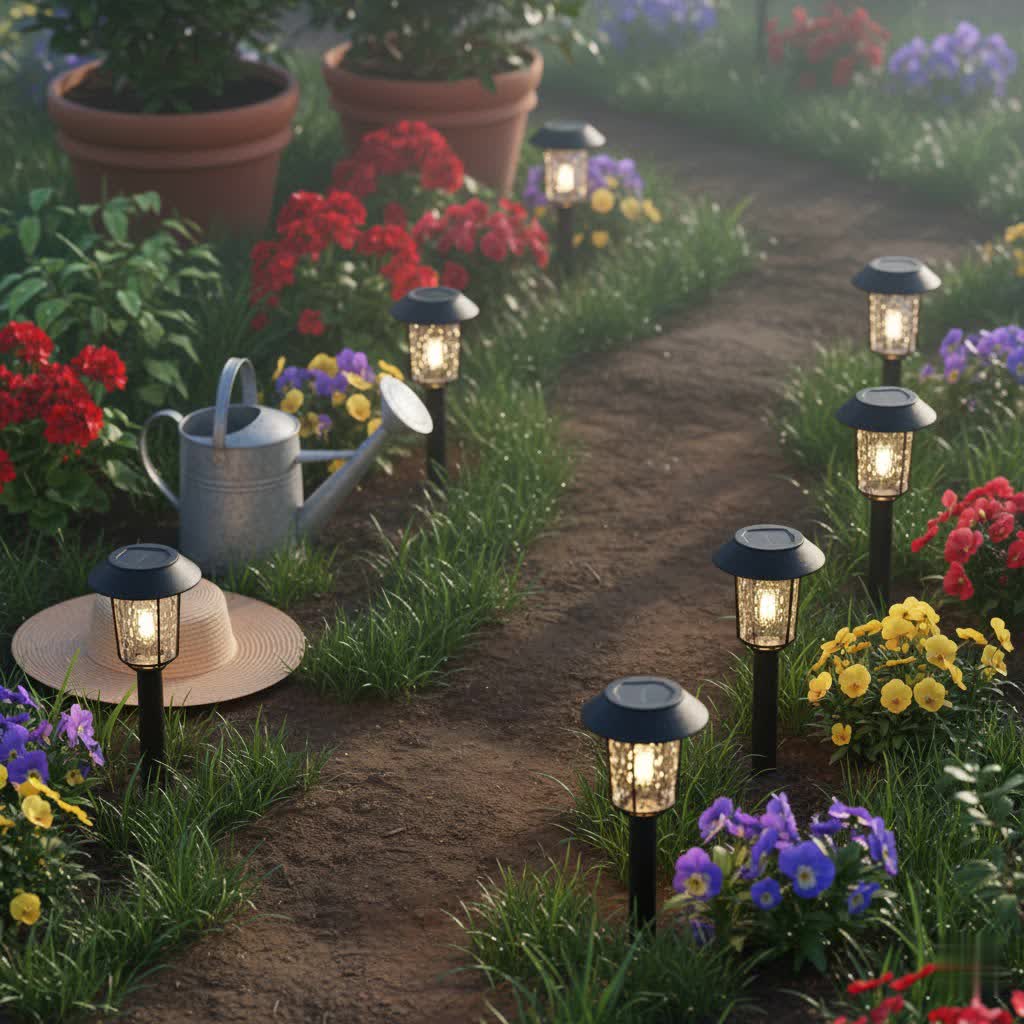
- Path Lighting: Solar garden stakes or low-power string lights can help define paths around your campsite, preventing trips and falls after dark.
- Exterior Ambiance and Decoration: Solar string lights or lanterns with color-changing modes are perfect for creating a warm and inviting atmosphere around your picnic area or campfire.
- Emergency Backup: Look for lights with a reliable SOS mode, long runtime, and ideally, a USB charging port to power essential devices during unexpected outages or emergencies.
Trusted Brands:
When selecting, prioritize brands with a proven track record in outdoor gear and solar technology. Look for companies known for quality construction, transparent specifications, and good customer support. MPOWERD Luci, LuminAID, and Goal Zero are consistently recommended for their reliable solar camping light offerings. Always check recent reviews and product longevity feedback before making a final decision.
Conclusion
Solar camping lights have revolutionized how we illuminate our outdoor adventures, offering a harmonious blend of efficiency, sustainability, and convenience. From compact inflatable lanterns to versatile string lights, these innovative devices provide reliable illumination while minimizing your environmental footprint and cutting down on recurring costs. By carefully considering brightness, battery life, durability, and your specific camping needs, you can choose a solar light that perfectly complements your next journey. Embrace the power of the sun and let solar camping lights brighten every moment of your time in nature. What kind of unforgettable memories will you create under the glow of sustainable light?
Frequently Asked Questions
How long do solar camping lights typically last on a single charge?
The runtime of solar camping lights varies significantly based on the model, brightness setting, and battery capacity. Many lights can last anywhere from 5-8 hours on their highest setting to 24-50 hours or more on a lower, ambient mode, making them suitable for overnight or multi-day trips with proper solar charging.
Can solar camping lights charge other devices, like a smartphone?
Yes, many modern solar camping lights come equipped with a USB port, allowing them to function as a power bank. While they typically offer a slower charge compared to dedicated power banks, they can provide enough emergency power to recharge a smartphone or other small electronic devices, making them a valuable multi-functional tool for off-grid adventures.
Are all solar camping lights waterproof?
While many solar camping lights are designed for outdoor use and offer some level of weather resistance, not all are fully waterproof. It’s crucial to check the IP (Ingress Protection) rating. An IP65 rating generally indicates protection against dust and strong water jets, while some inflatable models are explicitly designed to be fully waterproof and even float, offering greater peace of mind in wet conditions.
How efficient are solar camping lights at charging in cloudy conditions?
Solar camping lights are most efficient when exposed to direct sunlight. In cloudy conditions, they will still charge, but at a significantly slower rate and may not reach full capacity. For prolonged cloudy periods or unexpected weather, models with supplementary USB charging capabilities are highly recommended to ensure you always have a light source.
What is the best way to store solar camping lights during the off-season?
To prolong the lifespan of your solar camping lights, store them in a cool, dry place away from direct sunlight and extreme temperatures during the off-season. It’s often recommended to fully charge the battery before storage and then occasionally top it off every few months to maintain battery health, especially for lithium-ion batteries.
