Imagine stepping into your garden as twilight descends, bathed in a soft, inviting glow that transforms your outdoor space into a captivating haven. For too long, achieving this vision has often meant grappling with complex wiring, escalating electricity bills, and environmental concerns. However, a brilliant solution shines through: outdoor solar LED lights. These innovative fixtures harness the sun’s power, offering an eco-friendly and cost-effective way to brighten and enhance any exterior area. This guide will walk you through everything you need to know, from the diverse types available to crucial buying considerations, essential maintenance, and the undeniable benefits of integrating solar LED lights into your home.
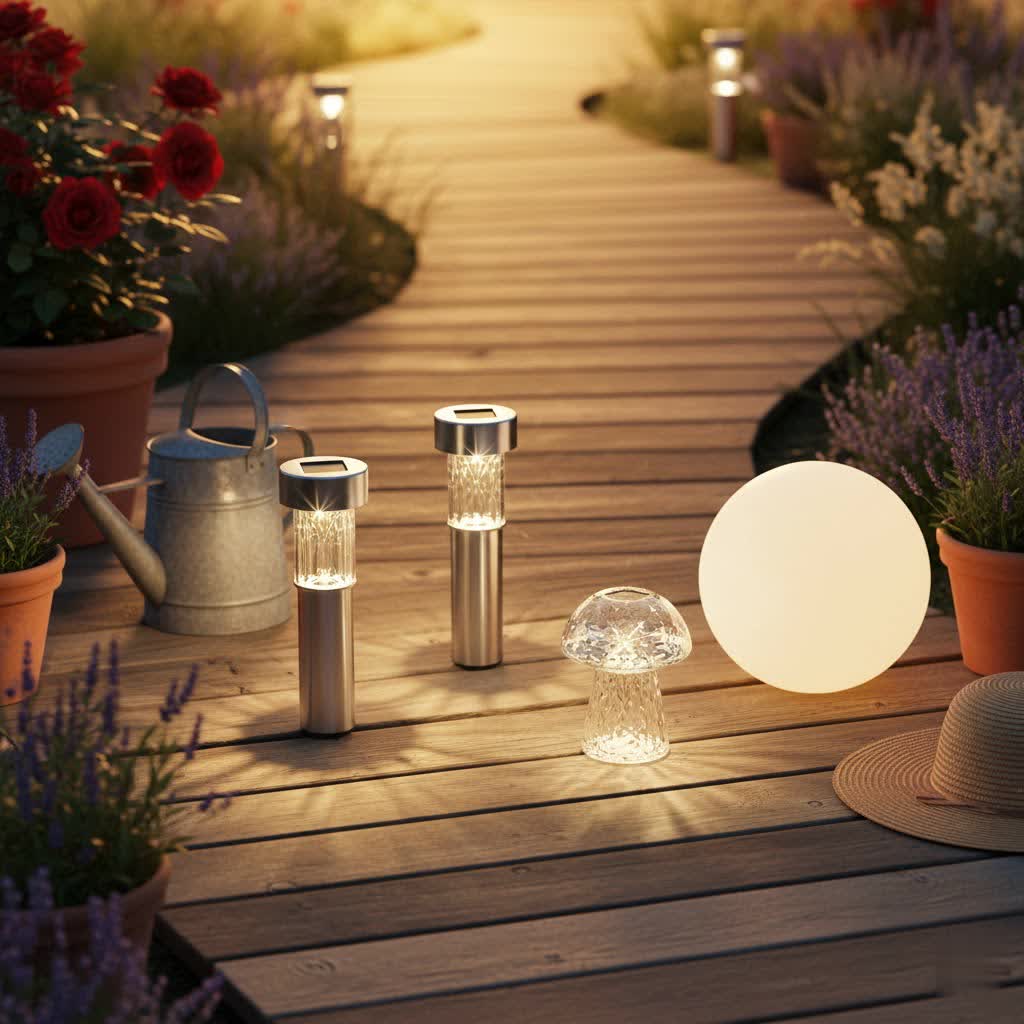
Outdoor Solar LED Lights: An Eco-Friendly & Cost-Saving Solution
The allure of outdoor solar LED lights lies in their remarkable blend of efficiency, convenience, and environmental responsibility. They convert sunlight into electricity, storing it in rechargeable batteries to power bright LED bulbs after dark. This process eliminates the need for grid electricity, freeing you from added utility costs and complex wiring installations.
Popular Types of Outdoor Solar LED Lights
The market offers a vast array of solar LED lights, each designed for specific applications and aesthetic preferences. Understanding the different types helps ensure you select the perfect illumination for your unique outdoor needs.
- Pathway Lights: These lights are typically staked into the ground along walkways, driveways, or garden beds to guide paths and enhance visibility. Offering subtle to moderate brightness, often ranging from 10 to 150 lumens, they provide a gentle, inviting glow.
- Spotlights: Designed to highlight specific landscape features such as trees, garden statues, or architectural elements, solar spotlights emit a concentrated beam of light. They can also serve practical security purposes, drawing attention to particular areas.
- Floodlights: For extensive coverage and heightened security, solar floodlights cast a wide, powerful beam across large outdoor areas like driveways, garages, or backyards. These lights are typically very bright, often producing 700 to over 2800 lumens.
- Deck and Fence Post Lights: These compact fixtures are specifically made to be mounted on deck railings, steps, or fence posts. They provide ambient lighting for outdoor living areas, enhancing safety and adding a stylish touch. Their brightness usually ranges from 3 to 30 lumens for subtle illumination.
- String and Globe Lights: Ideal for creating a festive or cozy ambiance, these decorative lights are often strung across pergolas, patios, or outdoor seating areas. They typically offer a warm, soft glow, with brightness levels for ambient lighting around 100-350 lumens.
- Wall Lights: Mounted on exterior walls, solar wall lights are perfect for illuminating entryways, patios, or perimeter fences. They offer moderate brightness, generally between 100 to 500 lumens, and many models include motion-sensing capabilities for added convenience and security.
- Garden and Decorative Lights: These lights prioritize aesthetics, coming in various stylish shapes and designs, such as globes, lanterns, or artistic figures. With lumens ranging from 5 to 50, they are perfect for landscaping, flower beds, and creating a pleasant ambiance rather than strong illumination.
|
Our Picks for the Best Solar Lights in 2026
As an Amazon Associate I earn from qualifying purchases.
|
||
| Num | Product | Action |
|---|---|---|
| 1 | LETMY Solar Pathway Lights Outdoor, 10 Pack Solar Lights Outdoor Waterproof, Auto On/Off Solar Powered Garden Landscape Path Lights, Outdoor Solar Lights for Yard Lawn Patio Walkway Driveway |

|
| 2 | [6 Packs] Solar Motion Sensor Outdoor Lights, Super Bright Solar Lights Outdoor Waterproof, 3 Lighting Modes Security Wall Light for Outside Walking Dog Fence Backyard Deck Garden Door Step Garage |
|
| 3 | NYMPHY Solar Lights Outdoor Waterproof IP68, 56 LED 3 Lighting Modes Solar Powered Garden Yard Spot Solar Lights for Outside Landscape- 4 Pack (Cool White) |
|
| 4 | Aootek New Solar Motion Sensor Lights 120 LEDs with Lights Reflector,270° Wide Angle, IP65 Waterproof, Step Lights for Front Door, Yard, Garage, Deck (Black, Daylight White, 6-Pack) |
|
| 5 | Solar Motion Lights Outdoor, Ultra Bright Solar Fence Lights with Motion Sensor, IP65 Waterproof Security Light 3 Modes, 270° Lighting Angle, Wall Lights for Deck Patio Fence Garage Door (6 Packs) |
|
| 6 | Solar Lantern Outdoor Waterproof, Metal Butterfly, Hummingbirds, Dragonflies, Frogs, Turtles, Flowers, Mushrooms, Garden Decor for Yard, Patio, Lawn, Porch, Backyard, Gifts for Women |
|
| 7 | Tuffenough Solar Outdoor Lights 2500LM 210 LED Security Lights with Remote Control,3 Heads Motion Sensor Lights, IP65 Waterproof,270° Wide Angle Flood Wall Lights with 3 Modes(2 Packs) |
|
| 8 | Solar Fence Lights Outdoor - 2700/4000/6000K 3 Mode, Waterproof LED, Fence Light Solar Powered for Outside, Backyard/Railing/Step/Patio/Wall and Home Improvement(8 Pack) |
|
| 9 | ALEPOD Solar Pathway Lights Outdoor - 8 Pack Solar Powered Garden Lights Waterproof IP65, Decor Landscape Lighting with Three Lighting Modes for Yard, Lawn, Walkway, Driveway, Warm White |
|
| 10 | addlon 54(48+6) FT Solar String Lights Waterproof,Patio Lights Solar Powered with Remote & USB Port 15+1 LED Shatterproof Bulbs 3 Light Modes, Dimmable Solar Light for Camping Backyard Garden |
|
Understanding Outdoor Solar LED Lighting Brands
When exploring outdoor solar LED lights, you’ll encounter numerous brands, each vying for your attention with promises of quality and performance. While a direct, exhaustive comparison of every brand’s specific product lineup is impractical due to constant market evolution, it’s beneficial to understand general attributes that differentiate them. Reputable brands often prioritize durable materials, efficient solar panels, and reliable battery life to ensure consistent performance. Many focus on specialized niches, such as pathway lighting (e.g., Alepod), decorative string lights (e.g., WYZM, Brightech), or robust security floodlights (e.g., AloftSun, WYZE). Look for brands known for robust weather resistance, consistent brightness, and innovative features like motion sensors or customizable settings, which speak to a commitment to user satisfaction and product longevity. Evaluating customer reviews for real-world performance and durability across different weather conditions can provide valuable insights into a brand’s overall trustworthiness.
Detailed Comparison of Solar LED Light Applications
To help visualize the differences between popular types of outdoor solar LED lights, consider this comparative overview:
| Feature | Pathway Light (Typical) | String Light (Typical) | Floodlight (Typical) |
|---|---|---|---|
| Brightness (Lumens) | 80-150 lumens | 100-350 lumens | 700-2800+ lumens |
| Primary Use | Guiding walkways, subtle accent | Ambiance, decorative lighting | Security, wide area illumination |
| Runtime (Hours) | 8-12 hours | 6-10 hours | 10-15 hours |
| Battery Life (Years) | 2-5 years | 2-4 years | 3-5 years |
| Waterproof Rating (IP) | IP65/IP66 | IP44/IP65 | IP67/IP68 |
| Key Features | Dusk-to-dawn, easy stake installation | Shatterproof bulbs, warm glow, simple setup | Motion sensor, adjustable heads, wide coverage |
How to Choose the Right Outdoor Solar LED Lights
Selecting the perfect outdoor solar LED lights requires careful consideration of several factors to ensure they meet your functional and aesthetic needs.
First, assess your outdoor lighting needs and the specific space you intend to illuminate. Are you looking to light a garden path for safety, highlight architectural features, or create a cozy ambiance on your patio? The purpose will dictate the type and intensity of light required.
Brightness, measured in lumens, is a critical factor. For subtle accent lighting, 10-45 lumens might suffice. General landscape lighting, like for pathways, typically benefits from 80-150 lumens, providing a balanced glow. For security-focused illumination or lighting larger areas, consider fixtures that offer 300 lumens or more, with powerful floodlights reaching into the thousands.
Battery capacity and runtime are crucial for consistent nighttime illumination. Look for lights with high-capacity batteries (often expressed in mAh) that can store enough energy to last throughout the night, even after shorter, cloudier days. Generally, lithium-based batteries offer better performance and longevity than Ni-MH.
The quality and placement of the solar panel directly impact charging efficiency. Monocrystalline solar panels are known for higher efficiency compared to polycrystalline ones. Always choose locations that receive at least 6 to 8 hours of direct sunlight daily for optimal charging. If your chosen spot has partial shade, consider lights with larger or adjustable solar panels to maximize sun exposure.
Weather resistance and durability, indicated by an IP (Ingress Protection) rating, are paramount for outdoor fixtures. An IP65 rating or higher signifies excellent protection against dust and heavy rain, ensuring your lights can withstand various outdoor conditions. Durable materials like stainless steel, high-quality plastic, or cast aluminum also contribute to longevity.
Finally, consider the color temperature (CCT), which determines the hue of the light. Warm white (2700K-3000K) creates a relaxing, inviting atmosphere, ideal for patios and seating areas. Cool white (4000K-5000K) provides a more vibrant light that enhances visibility and highlights features. Some lights even offer selectable CCT, allowing you to switch between different tones. Additional features like motion sensors, remote controls, or smart app connectivity can further enhance convenience and functionality.
Essential Tips for Using and Maintaining Outdoor Solar LED Lights
To ensure your outdoor solar LED lights perform optimally and last for years, proper installation, use, and maintenance are key.
Installation is generally straightforward, but correct placement is vital. Ensure the solar panel component of your lights receives at least 6-8 hours of direct sunlight daily for efficient charging. Avoid placing them under dense tree canopies or in shaded spots that can obstruct sunlight. Securely mount or stake the lights according to the manufacturer’s instructions to prevent them from being dislodged by wind or accidental bumps.
Regular cleaning of the solar panels is perhaps the most important maintenance step. Dust, dirt, leaves, and other debris can accumulate on the panels, significantly reducing their ability to absorb sunlight. Gently wipe the solar panels with a soft cloth and mild soapy water regularly, especially if you live in a dusty area. Avoid using harsh chemicals or abrasive materials that could scratch or damage the panel surface.
Battery care is also crucial for extending lifespan. While solar lights use rechargeable batteries (Ni-MH or lithium-based) designed for longevity, they will eventually degrade. Inspect battery compartments for signs of corrosion and replace batteries every 1-2 years or when you notice a significant drop in performance, such as lights staying dim or not lasting through the night. A useful tip before initial use or if lights are performing poorly is to turn them off and let them charge in direct sunlight for two to three days to ensure a full charge cycle.
Environmental factors also play a role. Regularly prune any nearby plants, trees, or shrubs that might grow to shade the solar panels. During periods of extreme weather, such as heavy snowfall or prolonged freezes, consider bringing movable solar lights indoors to protect them and prolong their life. For non-movable fixtures, ensure they are securely mounted to withstand strong winds and heavy rains.
Address common issues like lights not turning on or appearing dim by first cleaning the solar panel. If that doesn’t work, consider fully charging the battery as described or replacing it. Sometimes, simply relocating the light to a sunnier spot can resolve performance issues.
The Abundant Benefits of Outdoor Solar LED Lights
Embracing outdoor solar LED lighting offers a wealth of advantages, transforming your property while promoting sustainability.
First and foremost are the significant cost savings. Once the initial investment is made, solar LED lights operate without drawing power from your electricity grid, virtually eliminating ongoing electricity bills for outdoor illumination. This makes them a highly economical choice in the long run.
Their environmental friendliness is another major benefit. By harnessing renewable energy from the sun, these lights reduce reliance on fossil fuels and produce zero greenhouse gas emissions. Choosing solar lighting helps reduce your carbon footprint and contributes to a cleaner, greener planet.
Ease of installation is a considerable convenience. Unlike traditional wired systems, solar lights require no complicated wiring, trench digging, or professional electrical connections. Simply place them where they receive ample sunlight, and they’re ready to go, offering unparalleled flexibility in placement.
Outdoor solar LED lights are also remarkably low maintenance. Equipped with durable LED bulbs that can last up to 50,000 hours and built-in dusk-to-dawn sensors, they automatically turn on and off, requiring minimal manual operation. Their weather-resistant designs ensure they withstand various outdoor conditions with consistent performance.
Furthermore, they enhance safety and security. A well-lit exterior deters potential intruders and ensures pathways, steps, and driveways are clearly visible, reducing the risk of trips and falls. Since they operate independently of the main power grid, solar lights continue to function even during power outages, providing peace of mind.
Finally, the aesthetic appeal and versatility of solar LED lights allow you to customize and elevate your outdoor ambiance effortlessly. Available in diverse designs, from elegant lanterns to subtle path markers, they not only serve a functional purpose but also significantly enhance the beauty and character of your garden and patio.
Buying Guide: Making an Informed Decision
When ready to invest in outdoor solar LED lights, consider your budget and specific usage needs to guide your choice.
Budgetary considerations can influence the type and quality of lights you purchase:
- Entry-level options are generally more affordable, often basic path lights or simple decorative items. They might offer fewer features, lower brightness, or shorter runtimes.
- Mid-range lights provide a good balance of durability, performance, and features, often including better weather resistance and moderate brightness, suitable for general illumination and ambiance.
- Premium or high-end models typically boast superior materials, advanced features like smart controls, high lumen output, and extended warranties, justifying a higher upfront cost with enhanced longevity and functionality.
Your usage needs should also heavily influence your selection:
- For pathway illumination and safety, focus on lights with moderate lumens (e.g., 80-150) and a durable stake design.
- For security lighting, prioritize floodlights or spotlights with high lumens (e.g., 700+) and motion sensors.
- To decorate and create ambiance, string lights or decorative garden lights with warmer color temperatures and lower lumens are ideal.
Choosing reputable brands known for product quality, performance, and customer support will help ensure a satisfying purchase and reliable outdoor lighting for years to come.
Conclusion
Outdoor solar LED lights represent a smart, sustainable, and aesthetically pleasing solution for illuminating any exterior space. From enhancing safety and security to significantly reducing electricity bills and minimizing environmental impact, their benefits are clear. By understanding the different types available, considering key selection factors like brightness and durability, and committing to simple maintenance practices, you can confidently choose the perfect solar LED lights to transform your garden, patio, or pathway into a beautifully lit extension of your home. How will you harness the endless energy of the sun to brighten your nights?
Frequently Asked Questions
How many lumens are ideal for outdoor solar lights?
The ideal lumen count depends on the light’s purpose. For subtle accent lighting, 10-45 lumens are suitable. Pathways typically require 80-150 lumens for visibility, while security or floodlights need 300 lumens or more to effectively illuminate larger areas.
Do outdoor solar lights need direct sunlight?
Yes, for optimal performance, most outdoor solar lights require at least 6 to 8 hours of direct sunlight daily to fully charge their batteries. While some may function in partial shade, their brightness and runtime will likely be diminished.
How often should I clean my solar LED lights?
It’s recommended to clean your solar panels at least once a month, especially in dusty areas, to remove accumulated dirt and debris. Use a soft cloth and mild soapy water to gently wipe the surface, ensuring maximum sunlight absorption and efficiency.
How long do solar LED light batteries last?
The rechargeable batteries in outdoor solar LED lights typically last between 2 to 5 years, depending on the battery type and usage. The LED lamps themselves are much more durable, often lasting 10 years or more.
